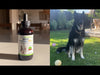
Description
What is Canine Diabetes Mellitus?
Diabetes results when the dog's pancreas fails to produce enough insulin. Sugars build up in the bloodstream rather than enter the body’s tissues where they would otherwise provide energy. (This is why diabetic dogs are often lethargic.)
Excess sugar in a dog's bloodstream can lead to several of other conditions, including heart, liver and kidney disease, increased infections, slow healing, cataracts, blindness, etc.
Risk factors for dog diabetes include:
- Obesity
- Poor diet
- Cortisone treatments
- Genetic predisposition
Diabetes is common more with:
- Female dogs
- Overweight dogs
- Middle-aged and older dogs
Common Symptoms of Dog Diabetes Mellitus include:
- Increased thirst, frequent urination
- Weakness, lethargy
- Signs of pain in the abdomen
- Cataracts (eyes cloudy rather than clear)
Diagnosing and treating Dog Diabetes
If you think your dog might have diabetes, you should take him to a vet. A veterinarian can diagnose dog diabetes mellitus by examining sugar levels in the dog's blood or urine.
A recommneded lifestyle change usually includes a healthy diet, high in fiber and complex carbohydrates. You should feed your dog in small amounts, several times a day, to help his body stabilize insulin levels. If your dog is overweight, you should help him lose weight through diet and increased exercise. Conventional treatment may also include regular injections of insulin.
Can herbal products support dog diabetes?
A carefully selected combination of herbal extracts – such as those in Feline Mellit – can help your dog's ability to live life as a diabetic. A natural product like this one is a perfect supplement to conventional treatment, creating an all around approach to dealing with dog diabetes.
Canine Mellit is completely natural, without harsh chemicals. It is gentle enough for long-term use.
Does this formula contain any diuretics?
Although an herb may have a slight diuretic effect it is not used as a diuretic in this formula. The combination of the other herbs in the formula help balance out the diuretic effect. For any of these herbs to work as a diuretic they would have to be taken as single herb at a different dosage or would have to be combined with other herbs that also work as diuretics.
Our customers have the last word…
"My dog Jake is getting on in years, to put it mildly. Not long ago, he was diagnosed with diabetes. I did not want to get into insulin injections, so my vet recommended I put him on a diet and try a natural supplement. Am I ever glad I did. Jake is now acting like he did five years ago!" Mike, Cornwall Ont.

"I wanted to tell you that our little Ellie is doing great on your Mellit product. After finding out that she had diabetes we got really frustrated. Although she is little, she is a squirmer and a fighter.
We found your product on the computer and after talking to a nice girl on the phone decided to try it. Ellie has been taking Mellit for three months now and is doing well. We had her tested after four weeks like the girl on the phone told us and the product is really doing its job. Thank you,"
Heidi and James, California

Natural support for dog diabetes… order now!
Reviews
Dosage & Directions
- To be given to pet twice daily. One drop for every 2 lb (1 kg) of body weight up to 50 lb (25 kg). Thereafter add one drop per additional 4 lb (2 kg). Please note that the product comes with an eye dropper to count out the drops. This dropper is marked at 0.5ML and 1ML. The 0.5ML line is equal to 10 drops.
- Product can be given with food or directly in the mouth with eye dropper.
- Product will last for 6 months. Please refrigerate after opening.
Cautionary Notes
Do not use if dog is pregnant.
Information presented at PetWellbeing.com is for educational purposes only; statements about products and health conditions have not been evaluated by the Food & Drug Administration.
Ingredients
- Jambolin: The volatile oils contain eugenol and metil salicylate; the fresh seeds have been found helpful in managing symptoms of canine diabetes; very beneficial in glycosuria, with no harmful effect reported.
- Devil’s Club: Helps to balance the glandular system and metabolism.
- Fenugreek: A bitter herb that helps support digestion, soothes irritated tissues, and manages blood sugar levels.
- Gymnema: The gymnemic acid binds to sugar-receptors, blocking temporarily the absorption of sugar molecules.
- Goat’s Rue: A bitter, mucilaginous, tonic herb; stimulates and guards the liver and while helping manage blood sugar levels.
- Oregon grape: Berberine leads to healthier pancreatic tissue.
- Blueberry: Acts as a urinary antiseptic (arbutin action) and helps with blood sugar levels (glucoquinones action).
- Dandelion: Nutritive, supports the kidneys, promotes liver function, and helps with swelling and inflammation.
- Astragalus: A sweet, tonic herb, stimulates the urinary and immune systems, helps with blood sugar.
- Glycerin based
Citations
- Wulff-Tilford ML, Tilford GL: Herbs for Pets; Bowtie, 1999.
- Mills S, Bone K: Principles and Practice of Phytotherapy, Churchill Livingstone, 2000.
- Bown D: Encyclopedia of Herbs & Their Uses; Dorling Kinderley, 1995.
- The Merck Veterinary Manual, 8th ed., MERCK & CO., INC. 1998.
- Couto N et al. Small Animal Internal Medicine; 2nd ed., Mosby; 1998.